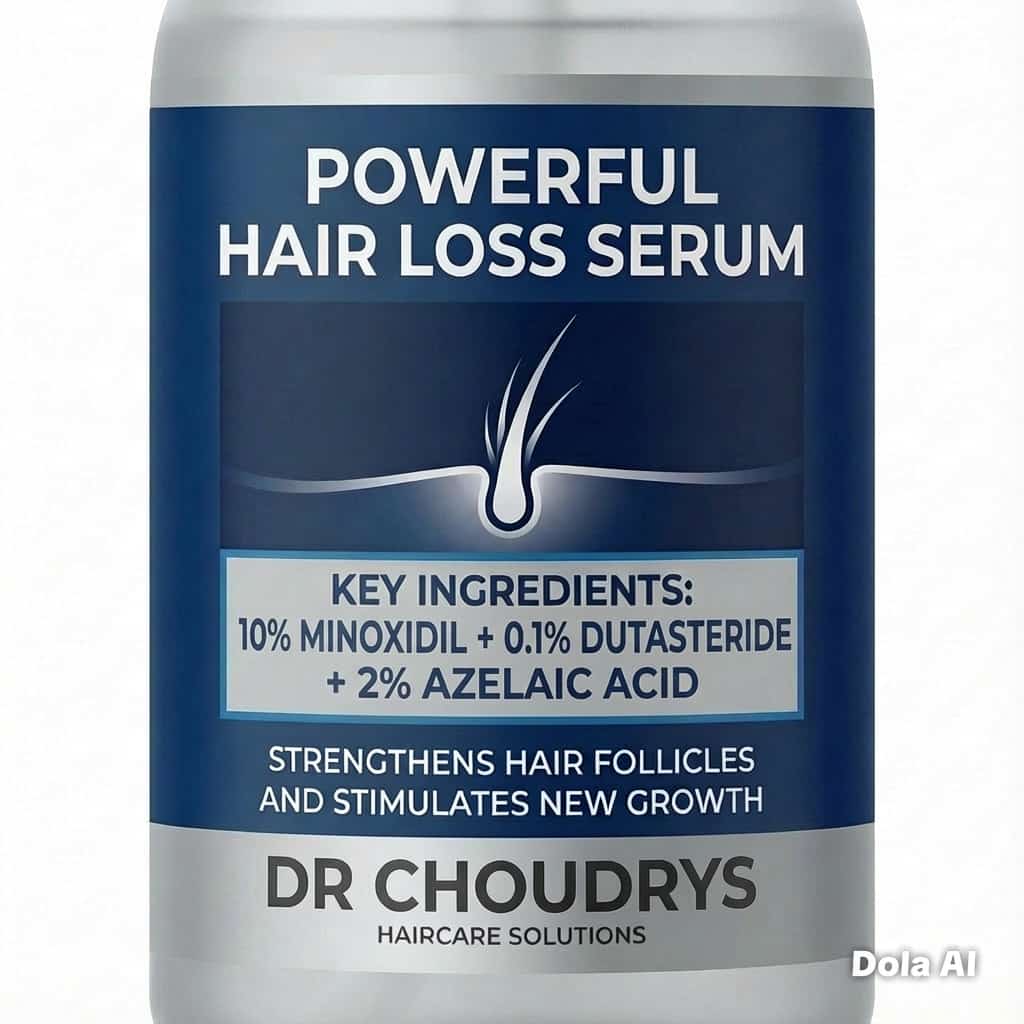
POWERFUL HAIR LOSS SERUM
Prescription-Led. Individually Formulated.
Hair loss isn’t one-size-fits-all — and neither is effective treatment.
Our Customised Hair & Scalp Serum is prescribed and compounded specifically for you, based on your gender, medical suitability, scalp tolerance, and goals. Each formulation is made to order, using clinically recognised ingredients at personalised strengths.
No generic formulas.
No unnecessary ingredients.
Just what’s appropriate for you.
Key Ingredients (used where clinically appropriate)
Minoxidil
A well-established topical ingredient used to support the hair growth cycle and help maintain the appearance of thicker, healthier-looking hair. Strength is selected based on individual suitability.
DHT-Modulating Actives (e.g. Dutasteride or Finasteride)
Prescribed only when appropriate, primarily for male patients, to help reduce scalp DHT activity and support follicle preservation.
Not suitable for women or those trying to conceive.
Azelaic Acid
Included to support scalp health and balance, while helping improve tolerance and penetration of other actives.
GHK-Cu (Copper Peptide)
A naturally occurring bioactive peptide used to support scalp condition and help maintain an optimal environment for hair-supporting ingredients.
How it works
1️⃣ Complete a short online consultation
2️⃣ Clinical review of suitability
3️⃣ Your personalised formula is prescribed
4️⃣ Freshly compounded and dispensed
START YOUR CONSULTATION - PRECISION TREATMNET STARTS WITH PERSONALISATION
Important information
This is a prescription-only product
Ingredients and strengths vary by individual
Not all ingredients are suitable for everyone
Our Hair Loss Serum is a prescription-led, individually formulated topical treatment for suitable patients experiencing hair loss. Rather than providing the same product to everyone, the formulation and strengths can be customised according to factors such as your pattern of hair loss, previous treatments, scalp tolerance and clinical suitability.
Our formulation can be customised to the individual, but the main ingredients typically include minoxidil, dutasteride, azelaic acid and biotin.
The strength of minoxidil can vary depending on the patient's individual requirements, previous treatment and tolerance. Other aspects of the formulation may also be adjusted where clinically appropriate.
Because the serum can contain prescription medicines such as dutasteride, it is not an off-the-shelf cosmetic hair product. Suitability is clinically assessed before treatment is prescribed.
Minoxidil is an established treatment for androgenetic alopecia, commonly known as male or female pattern hair loss. Applied to the scalp, it can help stimulate susceptible hair follicles and support the hair-growth cycle. Consistent, continued treatment is usually required to maintain the benefit.
Dutasteride inhibits the enzymes responsible for converting testosterone into dihydrotestosterone (DHT). DHT plays an important role in the progressive miniaturisation of genetically susceptible hair follicles in male pattern hair loss. Where clinically appropriate, dutasteride may therefore be included as part of a personalised topical formulation.
A topical treatment is applied directly to the scalp rather than taken as a tablet. This can be a useful treatment option for some patients and allows several ingredients to be incorporated into one personalised formulation.
However, topical prescription medicines can still be absorbed into the body and potentially cause systemic side effects. Topical treatment should therefore not be regarded as completely risk-free simply because it is applied to the scalp.
No. The cause of hair loss should be considered before treatment is prescribed. The serum may be appropriate for patients with androgenetic or pattern hair loss, but other causes of shedding may require investigation or a different treatment.
The ingredients also have individual contraindications and precautions. This is why we assess suitability before prescribing rather than selling the serum as a general cosmetic product.
A personalised topical treatment may be suitable for some women, but the formulation needs to be selected carefully. Dutasteride has important pregnancy-related restrictions and is not appropriate during pregnancy.
Female hair loss can also be associated with factors such as iron deficiency, thyroid disorders and hormonal changes, so blood testing or further investigation may sometimes be recommended before deciding on treatment.
Hair growth is slow, so results should be assessed over months rather than weeks. Some patients may initially notice increased shedding after starting treatments such as minoxidil as follicles move through different stages of the hair-growth cycle.
Response varies between individuals, and no hair-loss treatment can guarantee a particular amount of regrowth.
Pattern hair loss is generally a progressive condition. Treatments such as minoxidil and DHT-modulating medicines help manage the process rather than permanently cure the underlying genetic tendency.
If treatment is discontinued, benefits achieved during treatment may gradually be lost and hair loss can resume.
Potential side effects depend on the ingredients and strengths prescribed. Topical treatment can cause scalp irritation, dryness, redness or itching in some patients. Minoxidil may occasionally cause unwanted hair growth outside the treatment area, particularly if the serum spreads onto surrounding skin.
Prescription ingredients such as dutasteride also have their own potential side effects and precautions. These will be considered as part of your clinical assessment.
Yes. Because the formulation can contain prescription-only medicines, treatment requires an appropriate clinical assessment before it can be prescribed.
This also allows us to determine the most appropriate formulation and minoxidil strength rather than providing every patient with exactly the same product.
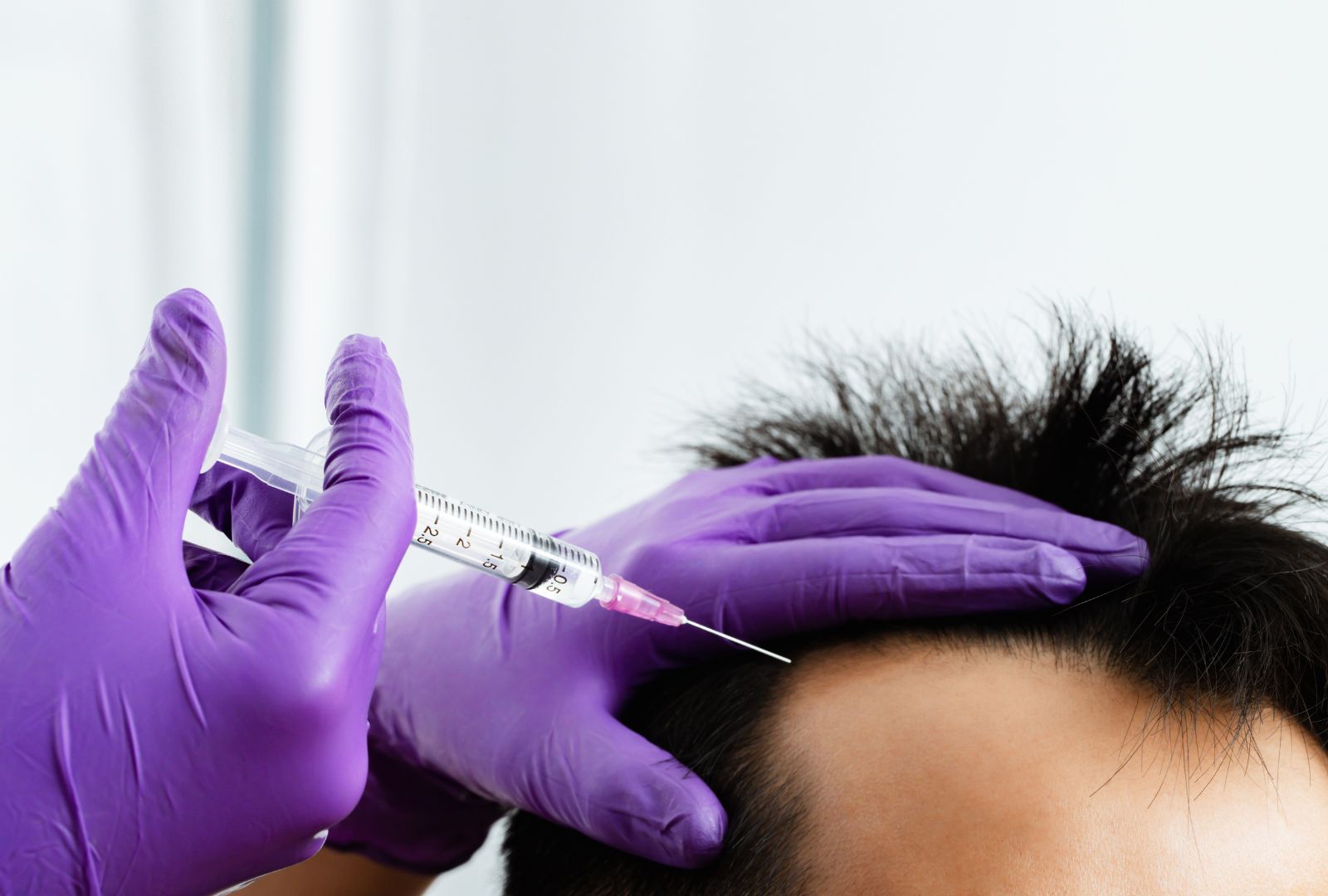
Potentially, yes. Prescription hair-loss treatment and regenerative treatments such as PRP and exosome-based scalp treatments work in different ways and may sometimes form part of a broader hair-restoration programme.
The appropriate combination depends on the type and extent of your hair loss, existing treatments and individual circumstances.
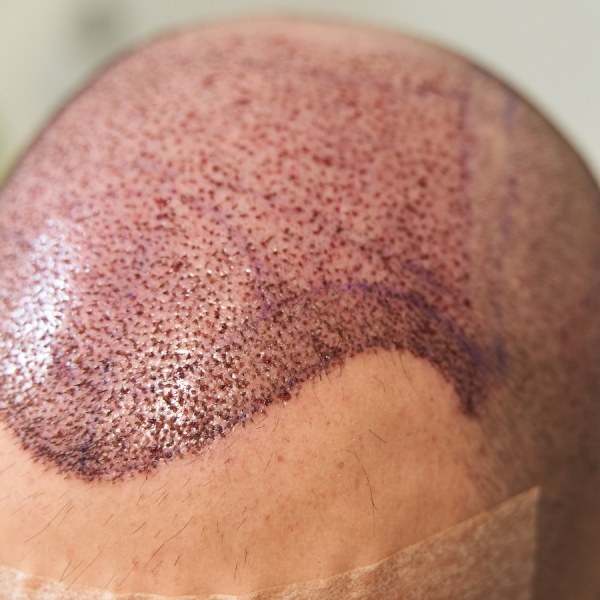
Prescription hair-loss treatment can be particularly relevant for hair-transplant patients because transplantation relocates follicles but does not necessarily prevent continued loss of the existing non-transplanted hair.
Medical treatment may therefore form part of a longer-term strategy to help manage ongoing pattern hair loss. Timing around a transplant should be discussed with your hair-transplant surgeon.
East Park Healthcare currently offers a 6-month supply for £195. The serum is individually prescribed and compounded following clinical assessment rather than being supplied as a standard over-the-counter cosmetic hair product.
East Park Healthcare provides private hair-loss assessment and prescription hair-loss treatment in Blackburn, alongside services including PRP, regenerative hair treatments and hair-transplant services through our partner surgeon.
Our Blackburn clinic is located at First Floor, 67 East Park Road, Blackburn, BB1 8DW.