Doctor-led Testosterone Replacement Therapy (TRT) Clinic in Blackburn
Testosterone Replacement Therapy (TRT) Clinic in Blackburn
WHAT IS TESTOSTERONE REPLACEMENT THERAPY?
What is Testosterone Replacement Therapy?
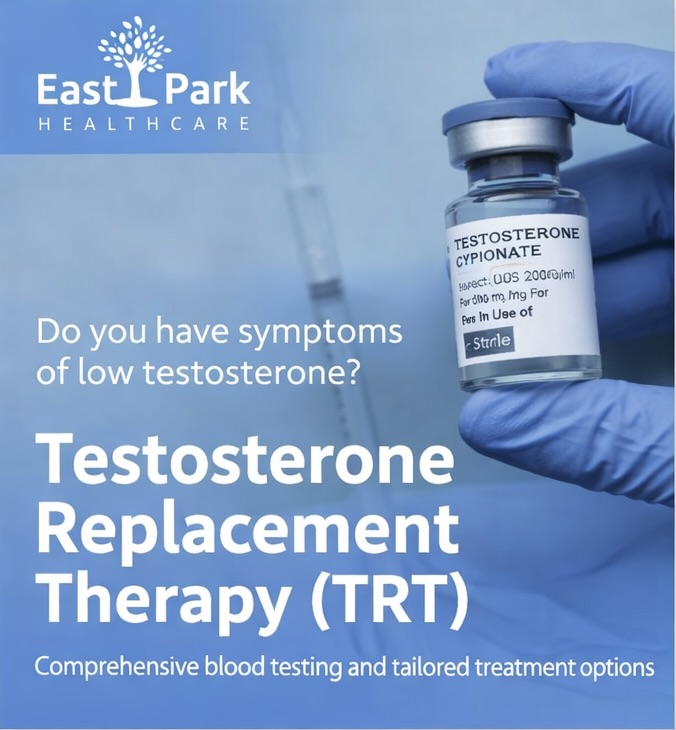
At East Park Healthcare, we provide a safe, medically led Testosterone Replacement Therapy (TRT) service for men with clinically confirmed low testosterone. Our approach is evidence-based, fully monitored, and tailored to the individual, with a focus on improving symptoms while protecting long-term health.
Testosterone is a key male hormone involved in energy levels, mood, libido, muscle mass, bone health, and metabolic function. Low testosterone, also known as hypogonadism, can occur due to age, medical conditions, lifestyle factors, or metabolic health issues and may significantly impact quality of life.
Who may be suitable for TRT?
Men with low testosterone often experience persistent fatigue, reduced libido, erectile difficulties, low mood, poor concentration, reduced muscle strength, increased body fat, or sleep disturbance. Symptoms alone are not sufficient to diagnose testosterone deficiency, which is why treatment is only considered following appropriate blood testing.
If you are experiencing symptoms that may be related to low testosterone and would like a professional assessment, our clinical team can guide you through testing, interpretation of results, and if appropriate a safe and monitored treatment plan.
Blood Tests and Medical Assessment
Our TRT pathway begins with a comprehensive clinical assessment. This includes a detailed medical history, symptom review, and diagnostic blood tests carried out in line with clinical guidance. Testosterone replacement is only offered when both symptoms and blood results support treatment.
Symptoms alone are not enough — TRT is only considered following appropriate blood testing.
Treatment Options and Personalised Care
Treatment is personalised. Some patients are started on topical testosterone gel, which is applied daily and allows for a gradual, adjustable approach. Others may be better suited to testosterone injections, which are administered on a regular schedule and provide stable hormone levels.
The most appropriate option is discussed with each patient based on medical history, test results, and individual preference.
Monitoring, Safety and Long-Term Care
TRT is a long-term medical treatment and requires ongoing monitoring to ensure safety and effectiveness. Patients are regularly reviewed, with repeat blood tests to assess hormone levels, red blood cell counts, and other relevant health markers. Dosages are adjusted where necessary to maintain testosterone within a safe and physiological range.
Testosterone therapy can affect natural testosterone production and sperm count. For patients who are planning to have children now or in the future, this is discussed in detail before treatment begins. Where appropriate, alternative or fertility-preserving options may be considered to support hormonal health while maintaining fertility.
Our Medical Approach at East Park Healthcare
At East Park Healthcare, our TRT service is clinician-led and focused on responsible prescribing. We prioritise patient safety, clear communication, and individualised care rather than one-size-fits-all protocols or unnecessary dosing.
BOOK YOUR CONSULTATION TODAY AND RESTORE YOUR STRENGTH, DRIVE AND WELLBEING.
CLINICAL APPROACH
We follow a structured medical pathway rather than a one-size-fits-all model, ensuring testosterone replacement therapy is only offered when clinically appropriate.
Each patient undergoes a comprehensive assessment which includes a detailed medical history, review of symptoms, evaluation of potential risk factors, and consideration of lifestyle and metabolic health.
Diagnostic blood testing is carried out in line with clinical guidelines. This includes measurement of total and free testosterone, SHBG, oestradiol, LH and FSH, full blood count, PSA where appropriate, and assessment of liver function and lipid profile.
Testosterone replacement therapy is only initiated when both clinical symptoms and blood results support treatment.
Before starting Testosterone Replacement Therapy, blood testing is required to assess your testosterone levels and wider health. Depending on your circumstances, testing may include total and free testosterone, SHBG, LH, FSH, oestradiol, full blood count, liver function, lipid profile and PSA where appropriate. Your medical history and results are reviewed by a clinician before treatment is prescribed.
Usually, no. A single low result does not necessarily confirm testosterone deficiency because testosterone levels can fluctuate. UK guidance recommends diagnosing testosterone deficiency in men who have relevant symptoms together with consistently low testosterone levels, with testosterone generally measured on at least two occasions.
Testosterone Replacement Therapy can be provided in different forms, including testosterone gels and injections. The most appropriate treatment depends on your blood results, medical history, symptoms, lifestyle and individual circumstances. At East Park Healthcare, treatment is clinician-led and tailored rather than using the same protocol for every patient.
Response to TRT varies between individuals and improvements do not necessarily happen immediately. Some symptoms may improve earlier than others, while changes in areas such as body composition can take considerably longer. Treatment is monitored through symptoms, clinical reviews and repeat blood tests rather than simply increasing testosterone based on how a patient feels. BSSM guidance recommends assessing response during treatment and recognises that some benefits can take six months or longer.
TRT is generally considered a long-term treatment when it is being used for confirmed testosterone deficiency. Testosterone therapy can suppress the body's own testosterone production, so starting treatment should be a considered medical decision rather than viewed as a short-term course. Your clinician will discuss the potential benefits, risks and longer-term implications before prescribing treatment.
Yes. Testosterone Replacement Therapy can suppress sperm production and may therefore reduce fertility. If you are currently trying for a baby or may want children in the future, it is important to tell your clinician before starting TRT. Fertility considerations and, where appropriate, alternative or fertility-preserving approaches can then be discussed.
Yes. Medical monitoring is an important part of safe TRT. Follow-up blood tests are used to assess testosterone levels and relevant health markers, including haematocrit and PSA where appropriate. Treatment can then be adjusted if necessary. BSSM guidance recommends ongoing assessment after treatment begins and continued monitoring during long-term therapy.
East Park Healthcare provides doctor-led Testosterone Replacement Therapy from our medical clinic at First Floor, 67 East Park Road, Blackburn, BB1 8DW. We provide assessment, diagnostic blood testing, clinician consultation, prescribing where medically appropriate and ongoing TRT monitoring. We also provide TRT services from our Greater Manchester clinic in Bury.